
Alpenglow moves closer to mainnet: where Solana's biggest consensus change stands
Alpenglow is the largest change to how Solana agrees on blocks since the network launched. As of mid-July 2026 it is rolling out through the Agave validator client, with testnet activation expected this summer and mainnet activation later in the year, after community testing and security audits.
What Alpenglow actually is
Today, Solana validators agree on the state of the network using Tower BFT, supported by Proof of History, and they cast their votes as regular on-chain transactions. Those vote transactions are invisible to most users but consume a large share of every block (commonly cited at around three quarters of block space).
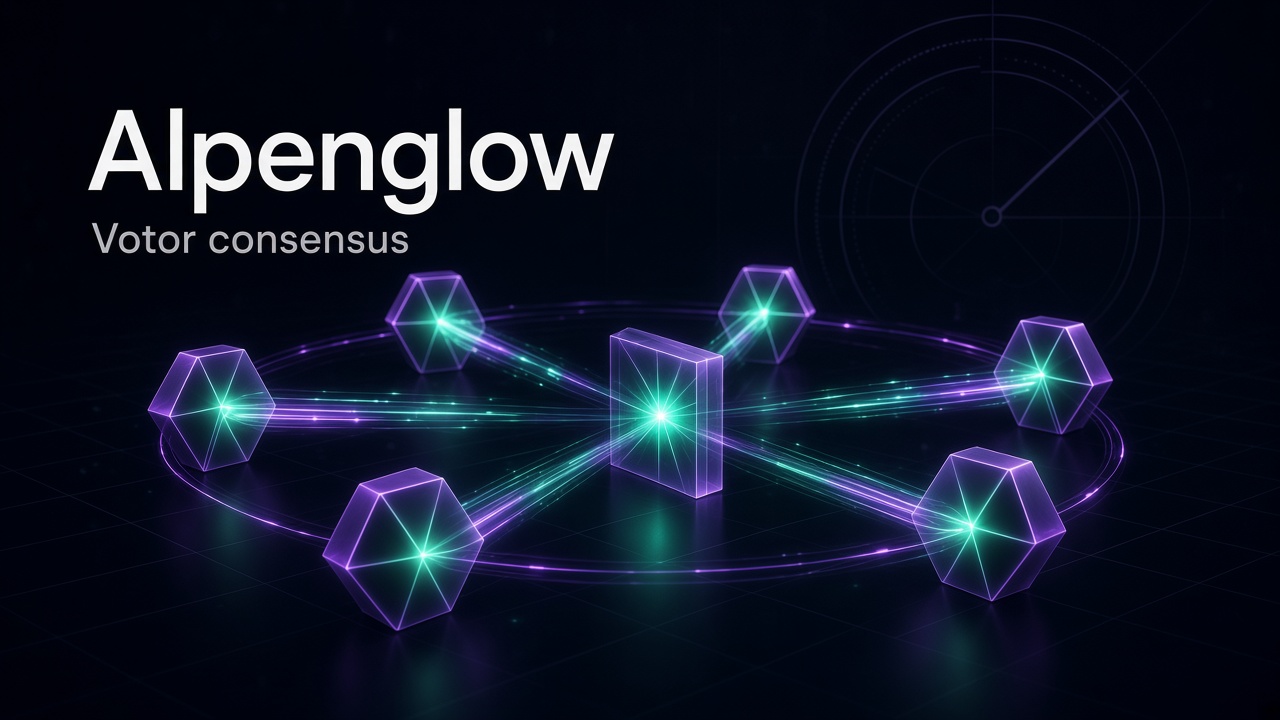
Alpenglow replaces this with a new voting and finality protocol called Votor. Votes move off-chain into direct messages between validators, and the network can finalize a block in roughly 100–150 milliseconds, down from several seconds today. For everyday use, that is the difference between "wait a moment" and "as fast as tapping a bank card."
How it got here
- May 2025: Anza unveiled Alpenglow at Solana Accelerate, written up as SIMD-0326.
- September 2025: the validator governance vote passed with about 98% approval, one of the strongest mandates in Solana's history.
- May 2026: Alpenglow went live on a community test cluster, the first time external validators ran it.
- July 2026: the final feature flag work has been merged into Agave; testnet activation is expected over the summer, with mainnet to follow once audits and testing complete. Most estimates point to late 2026.
- July 31 / August 2026: Agave 4.2 ships with feature-complete Alpenglow for test clusters; mainnet consensus activation was then targeted for Agave 4.3 in October 2026 (that date later slipped – see the update above).
What it changes, and what it does not
The version heading to mainnet covers the Votor consensus change only. Other parts of the original Alpenglow paper (the Rotor data-distribution layer and slashing mechanisms) are deferred to future proposals. So the headline improvement is finality time and the removal of vote transactions, not the full redesign in one step.
One notable economic change: Alpenglow introduces a Validator Admission Ticket (VAT), a fee (currently proposed at 1.6 SOL per epoch) that validators pay to participate in consensus. Combined with the removal of per-vote transaction fees, this reshapes validator operating costs, which is worth watching if you care about the health of smaller independent validators.
What it means for…
Validators
Alpenglow is delivered through Agave releases, so plan upgrade windows early. Vote transactions leave the blocks, and the Validator Admission Ticket (VAT, currently proposed at 1.6 SOL per epoch) replaces per-vote fees. Operating costs shift; smaller independent operators need to model the new economics before mainnet activation.
Delegators
No migration or restaking required. The indirect effect is validator economics: operators who communicate upgrade plans and stay current on Agave handle the transition better than those who lag.
Builders
Finality drops to roughly 100–150 ms once Votor is live on mainnet. Apps that today wait several seconds for confirmation can tighten UX assumptions, though the full Rotor layer (faster block propagation in simulations) ships later. Design for Votor-only improvements first.
Everyone else
If you hold or use SOL without running infrastructure, the practical change is faster transaction confirmations in wallets and apps. Nothing to configure on your side.